Pakistan Cricket Problems: Tactical Insights
Pakistan cricket faces deeper problems in selection, captaincy, batting roles, partnerships, and outside noise. Here is the full tactical picture.
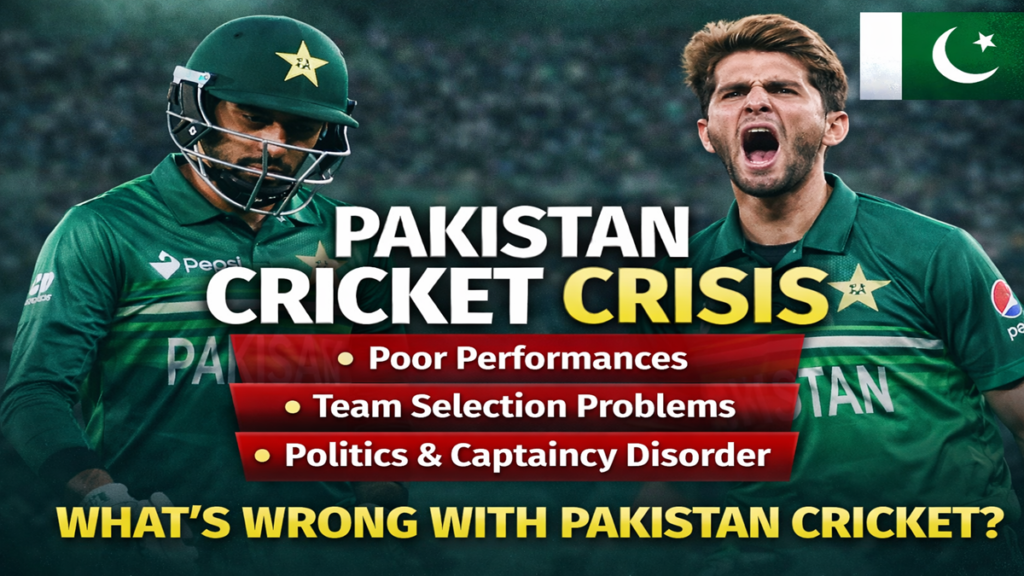
Pakistan Cricket Tactical Insights: Why the Team Keeps Losing Shape
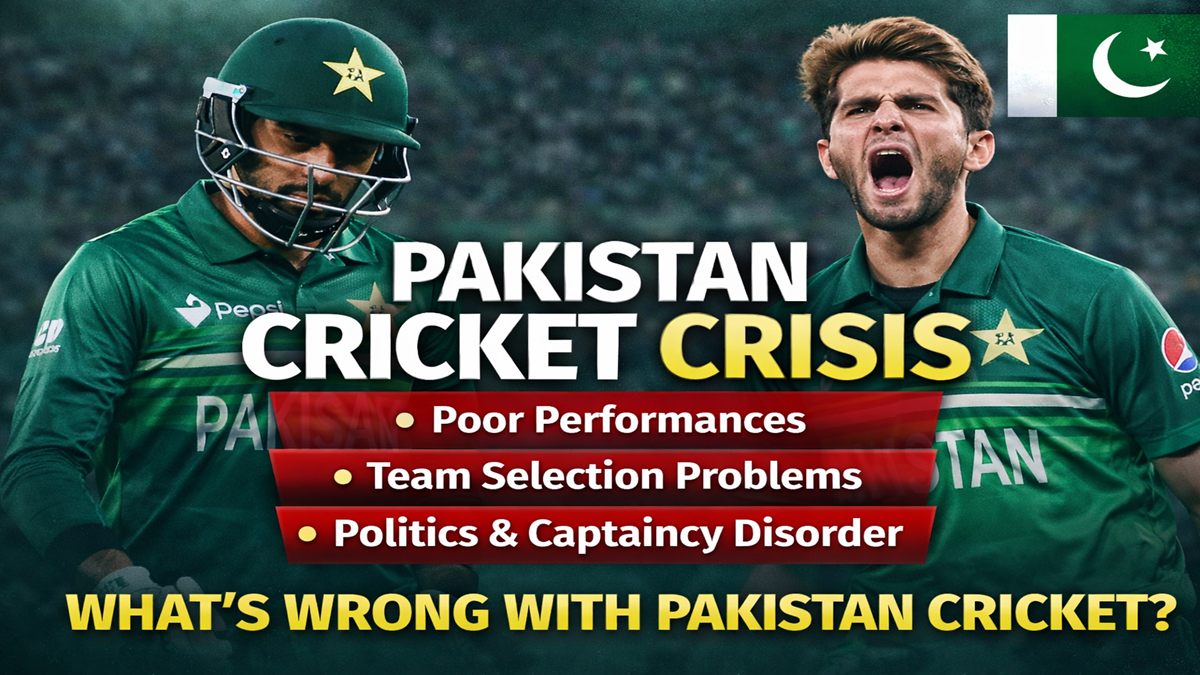
Pakistan cricket is not dealing with one bad week or one poor series. The bigger problem runs much deeper. Right now, the team looks unsettled in almost every area. Results have slipped, selection calls have looked reactive, and leadership has changed too often. As a result, the side has struggled to hold one identity for long enough to grow.
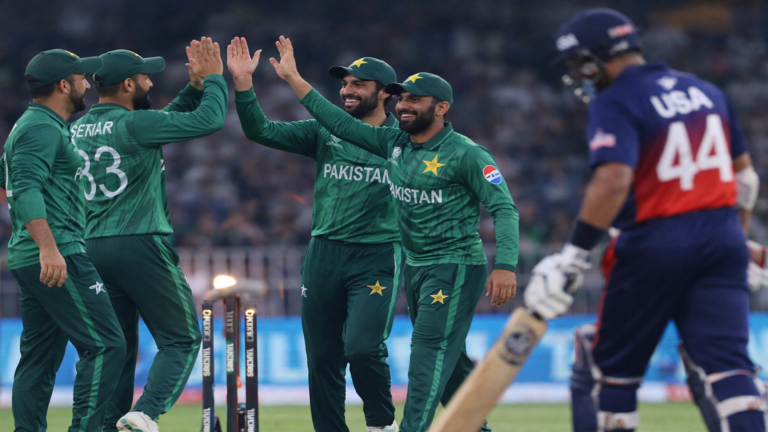
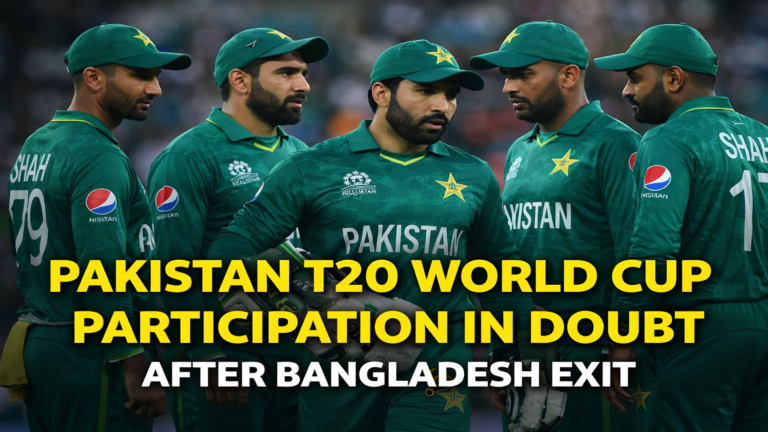
Recent events have made that problem even clearer. Pakistan failed to reach the semi-finals of the 2026 T20 World Cup. In the final Super Eight match against Sri Lanka, they showed both their strength and their weakness in the same game. They built a record 176-run opening stand, yet still lost eight wickets for 34 and crashed out of the tournament. Soon after that, they went to Bangladesh for an ODI series under Shaheen Shah Afridi, with Babar Azam left out and several new faces brought into the squad. Pakistan then lost the series 2-1 after being bowled out for 114 in the opener.
That is why this discussion must go beyond emotional blame. One dropped catch or one poor innings cannot explain the whole decline. The issue is structural. A strong international side needs clarity from the board, the selectors, the coach, and the captain. Pakistan, too often, has looked like a team living from series to series instead of building toward one long-term plan. That is where the real tactical debate begins.
Pakistan Cricket Has Lost a Clear Identity
Every successful white-ball side knows what it wants to be. Some teams attack hard in the powerplay. Others trust control first and then expand later. Some build around pace, while others rely on spin and flexible batting. Pakistan cricket, however, has often looked caught between styles. At times the side talks about fearless cricket. At other times it falls back into caution. That mixed signal shows up in both selection and execution. The team rarely looks fully sure of its own method.
A team loses shape when its message keeps changing. Pakistan’s recent white-ball journey reflects that problem. Babar Azam stepped down after the 2023 World Cup, returned as white-ball captain in March 2024, then stepped down again in October 2024. After that, Mohammad Rizwan led the ODI side, Salman Ali Agha took over the T20I captaincy in March 2025, and Shaheen Shah Afridi became ODI captain in October 2025. Mike Hesson then arrived as white-ball head coach in May 2025. That is too much movement in a short period for a side that still needs stability.
Pakistan Cricket Keeps Resetting Leadership
Leadership changes do not always hurt a team. In fact, split captaincy can work very well. Yet it only works when the wider structure stays calm. Players need to know the style will remain steady even if the captain changes. Pakistan cricket has not always offered that comfort. Each change has felt bigger than a routine cricket decision. Therefore, every captain has carried the extra burden of public pressure, media noise, and board-level expectation.
That matters on the field. Batters need role clarity. Bowlers need trust through hard spells. Senior players need to know whether they are part of the core or part of the debate. When the voice at the top keeps changing, those answers become less clear. Pakistan cricket then starts to look like a team performing for the next selection meeting instead of the next global event. That is a dangerous place for any side to live. This is my reading of the pattern created by the repeated captaincy changes and squad resets.
Pakistan Cricket Still Lacks One White-Ball Story
A team can survive technical flaws if its cricket story remains clear. Pakistan has not had that advantage often enough. One format gets one leader. Another format gets another. One tour rewards experience. The next brings in a wave of uncapped players. One tournament asks for intent. The next seems to punish risk. None of those decisions are automatically wrong on their own. Taken together, though, they create a side that often feels halfway between rebuild and reaction.
That is why Pakistan cricket now looks vulnerable at the identity level. The talent still exists. The pace, skill, and batting depth are not gone forever. However, talent without a settled plan usually produces flashes rather than sustained control. Pakistan has shown exactly that. A brilliant opening stand against Sri Lanka did not become a complete T20 innings. A refreshed ODI squad did not become a stable series-winning unit. The problem was not only execution. The problem was the lack of one settled direction.
Pakistan Cricket Selection Keeps Creating Confusion
Selection is where a cricket board shows its real thinking. If a side knows its style, its squad choices usually make sense even when fans disagree. Pakistan’s recent selections have often felt harder to read. The Babar Azam decision is the clearest example. Reuters reported that Pakistan dropped him for the Bangladesh ODI series despite his unbeaten ODI hundred against Sri Lanka in November. The omission followed a poor T20 World Cup, not poor ODI form. At the same time, Pakistan named six uncapped players in the squad. That mix of shock and renewal sent a very loud message.
There can be a sound cricket argument for change. Teams must refresh. Domestic performance must matter. Fresh players deserve openings. Yet timing also matters. Format matters. Role fit matters. When a player gets dropped after one format and replaced in another, the public quickly stops seeing the move as technical. It starts to look symbolic. That hurts both the player who leaves and the player who enters. One feels publicly punished. The other arrives under unfair pressure.
Pakistan Cricket Drops Seniors Without a Clear Format Story
Pakistan cricket needs to separate format logic from public frustration. A T20 slump should trigger a T20 conversation first. An ODI squad should then be picked with ODI roles in mind. If that line becomes blurred, the squad starts to look reactive. That is what happened around the Bangladesh series. Pakistan had just exited the T20 World Cup. Soon after, they went into an ODI series with Babar out, Shaheen leading, and several uncapped players included. The move may have had internal logic, but the public picture still looked rushed.
This is where Pakistan cricket must improve its messaging. When selectors make a bold call, they should explain the format reason, the role reason, and the timeline. That would lower the emotional temperature around the decision. It would also help players understand whether they are being rested, replaced, or redefined. Right now, those lines can look blurred. That uncertainty damages trust, and trust is one of the hidden foundations of team performance. This is an inference based on the recent sequence of squad and captaincy changes.
Pakistan Cricket Needs a Stable Pathway for New Players
Pakistan has shown a welcome willingness to reward new names. That is a good sign in principle. The PCB also confirmed in June 2025 that its men’s national selection committee remained intact, with Aqib Javed, Aleem Dar, Asad Shafiq, and Azhar Ali as voting members, while Usman Hashmi served as non-voting data analyst. On paper, that gives Pakistan enough experience and cricket knowledge to build a steady pathway from domestic cricket to the national side.
The challenge lies in turning that structure into visible continuity. Young players should enter a side that already knows what each role means. They should not arrive as symbols of national frustration. Pakistan cricket still needs to protect emerging players from that burden. A debutant opener, middle-order batter, or all-rounder can only grow when the team around him is stable enough to support mistakes. At the moment, Pakistan sometimes gives new players opportunity without giving them enough structural shelter. That is my interpretation of how the recent transitions have unfolded.
Pakistan Cricket Batting Keeps Breaking in the Middle
Pakistan’s batting remains the most visible sign of the wider problem. The side still has players who can produce big scores. It still has enough skill to dominate stretches of an innings. What it lacks too often is continuity from one phase to the next. The Sri Lanka match at the T20 World Cup captured that perfectly. Pakistan flew to a record 176-run opening stand. Then the rest of the line-up collapsed. A side that wants to win global events cannot keep turning dream starts into incomplete totals.
The Bangladesh ODI series told a similar story in another format. Pakistan were rolled for 114 in the first ODI, recovered to level the series in the second, then lost the decider 2-1. Those swings do not simply reflect ordinary inconsistency. They point to a batting group that still lacks a dependable method under pressure. Strong teams absorb an early wicket and keep moving. Pakistan often absorbs one setback and starts searching for a new plan mid-innings.
Pakistan Cricket Still Depends on Rescue Innings
A stable batting side builds the game in layers. One pair sets the tone. Another pair keeps the rate healthy. A later partnership finishes the work. Pakistan cricket too often reaches for rescue innings instead. When the top order fails, one batter has to repair the damage. When the start shines, the middle order has to protect the launch. Too often, one phase survives while the next collapses. That forces individual players to do two jobs at once.
This pattern creates pressure on both senior names and new players. If the top order fails, the middle order enters under scoreboard stress. If the openers dominate, the middle order enters with expectation to explode immediately. Pakistan has not consistently built the calmer middle ground between those two extremes. As a result, innings can look brilliant for ten overs and confused for the next ten. That is not only a technical problem. It is also a role problem. This is my tactical reading of Pakistan’s recent batting swings.
Pakistan Cricket Partnerships Keep Arriving Too Late
Partnerships do more than add runs. They control a game’s emotional direction. Good one-day sides usually build at least one major stand at the top, one stabilising stand in the middle, and one finishing stand at the death. Good T20 sides need at least one clean bridge between powerplay intent and finishing power. Pakistan cricket too often gets one strong stand without the next link in the chain. That is why the innings can lose shape so quickly after a promising start.
Chemistry also matters here. Batting pairs improve with time. Players learn each other’s tempo, running patterns, and risk points. Constant changes in batting positions and personnel interrupt that rhythm. Pakistan’s line-up has often looked like a group of good players still negotiating who owns which phase of the innings. That makes partnerships harder to repeat. It also makes collapses more likely when one set batter falls. Again, this is an inference from the recent turnover in captains, squads, and format roles.
Pakistan Cricket Captaincy No Longer Feels Settled
Captaincy should simplify a team. It should create a stable dressing-room tone and a visible plan on the field. Pakistan cricket has often asked captaincy to do too much. Instead of sitting on top of a settled system, the role has become part of the system’s instability. That makes life harder for every leader, whether it is Babar Azam, Mohammad Rizwan, Salman Ali Agha, or Shaheen Shah Afridi.
No captain will look fully convincing if the role itself keeps changing shape. One leader comes in after a poor tournament. Another leaves after a short run. A third gets a different format. A fourth inherits a squad in transition. That sequence creates noise even before the first ball of a new series. Pakistan cricket has not protected its captains from that cycle often enough. That has hurt both perception and performance.
Pakistan Cricket Needs One Message From the Top
Pakistan can use split captaincy successfully. Many top sides do. Still, that only works when the board, coach, and selection group all tell one clear story. Mike Hesson’s appointment as white-ball head coach offered a chance to create that clarity. The next step is to protect it. If the team keeps changing direction after every poor event, even the best coach will struggle to build a stable style.
That is the heart of the captaincy issue. The debate should not start with, “Who should lead?” It should start with, “What type of side is this captain meant to lead?” Once that answer becomes clear, leadership decisions look cleaner and feel fairer. Without that answer, every captain simply becomes the next face of a problem that runs deeper than one person. This is an interpretation based on Pakistan’s recent leadership churn.
Pakistan Cricket Must Stop Using Captaincy as Therapy
Boards sometimes treat captaincy change as instant medicine. It rarely works for long. A new leader may lift energy for a short period, but he cannot solve confused selection, unstable batting roles, and outside noise on his own. Pakistan cricket has too often looked tempted by quick emotional resets. That makes the captaincy job heavier than it needs to be.
A better route would be simple. Pick a format leader. Back him for a clear cycle. Match the squad to his style. Then judge the team over time, not only over one bad week. Pakistan cricket has enough talent to recover, but recovery needs patience. Without patience, every leadership move will look temporary, and temporary leadership rarely builds lasting cricket. That conclusion follows from the pace of Pakistan’s recent captaincy changes.
Pakistan Cricket and the Outside Noise Problem
Pakistan cricket does not exist in a quiet environment. It carries huge public attention, heavy media discussion, and deep national emotion. That comes with the territory. However, there is a difference between passionate interest and disruptive noise. In Pakistan’s case, the noise around the team often grows larger because governance itself remains highly visible. Reuters reported in February 2025 that PCB chairman Mohsin Naqvi was also serving as Pakistan’s interior minister while the country prepared to host the Champions Trophy. That overlap does not prove team interference, but it does shape public perception.
Perception matters in modern sport. Even when a decision is made for sound cricket reasons, people will doubt it if the system already looks political from the outside. That makes every selection, every captaincy call, and every public explanation harder to trust. Pakistan cricket therefore needs cleaner separation in tone, language, and process. It needs cricket decisions to look like cricket decisions. That is the safest way to lower suspicion and rebuild confidence. This is an inference drawn from the governance context reported by Reuters.
Pakistan Cricket Suffers When Cricket Decisions Look Political
This point needs care. The issue is not whether politics always controls selection. There is no basis here to make that claim. The issue is that the system can look crowded by outside power and public tension. Once that happens, cricket debates stop feeling purely tactical. They turn into arguments about influence, agendas, and symbolism. That atmosphere drains trust from the team environment.
Players feel that pressure too. When every call gets framed as a bigger statement, performance anxiety rises. A dropped player becomes a national controversy. A new player becomes a public test case. A captain becomes the face of a board moment. Pakistan cricket needs to cut that weight down. The team already has enough on-field problems to solve without carrying so much extra noise. This is an interpretation of how public scrutiny interacts with recent governance visibility.
Pakistan Needs Calmer Governance
The good news is that calmer governance is still possible. Silence is not the answer here. What Pakistan cricket needs is discipline, clarity, and consistency. Selectors should explain the cricket reason behind each major call. Any captaincy change should come with a clear format plan. A rebuild also needs steady support from the board and coaching staff, so players believe the message will last. In simple terms, Pakistan cricket would benefit far more from continuity than from theatre.
That shift would help the dressing room immediately. It would also help fans judge the team more fairly. Right now, Pakistan’s results often arrive inside a storm of wider debate. A calmer structure would not solve every weakness overnight, but it would give the players a better chance to focus on cricket rather than constant narrative management. That is one of the most practical gains Pakistan can pursue right now. This is my analytical conclusion based on the recent pattern of leadership and selection communication.
Pakistan Must Change Three Things Quickly
Pakistan does not need another dramatic slogan. It needs a practical reset. The first step should be a clear 12-month selection map. The board and selectors must decide which players form the ODI core, which players fit the T20 plan, and which names can genuinely serve both formats. Once that map exists, sudden emotional shifts should reduce. Players may still go in and out, but the public and the squad will at least understand the logic.
The second step should be role clarity in batting. Pakistan must define what it wants from its openers, No. 3, middle-order anchors, floaters, and finishers. The team cannot keep asking the same players to solve every phase. Modern white-ball cricket rewards specialists as much as stars. Pakistan needs role fit, not just reputation. That is especially true after recent evidence from the T20 World Cup and the Bangladesh ODI series.
The third step should be continuity around leadership. Mike Hesson’s arrival gave Pakistan a chance to settle its white-ball structure. That structure now needs protection. Captains must know the board will not reach for panic after one poor patch. Players must know their coach is building toward something. Without that sense of time, Pakistan cricket will keep producing isolated good moments without lasting shape.
Pakistan Should Pick Format-Specific Cores
Not every strong player belongs in every format plan. Pakistan will improve faster if it stops treating formats as small variations of the same team. ODI batting needs different pacing from T20 batting. ODI bowling plans need different balance from T20 matchups. A clearer format split would reduce confusion around selection and give more honest chances to the right players. That is one of the simplest changes Pakistan can make. This is an inference from the recent mismatch between T20 form debates and ODI squad decisions.
Pakistan Cricket Must Define Roles Early
A player performs better when he knows his exact job. Openers need to know whether to absorb or attack. Middle-order batters need to know whether to stabilise or counterpunch. Finishers need regular chances in their proper phase, not random entries after collapse. Pakistan’s instability has blurred those jobs too often. The result has been uncertainty in the middle overs and fragile finishing patterns. That is why role clarity should sit at the centre of the rebuild. This is my tactical reading of Pakistan’s recent batting problems.
Pakistan Cricket Must Value Continuity
Above all, Pakistan cricket must give one plan enough time to breathe. That does not mean ignoring failure. It means judging failure within a framework. Teams grow when they repeat processes, not when they restart them every few months. Pakistan has changed too much, too often, and too publicly. Until that cycle slows down, the side will keep looking more uncertain than it should.
Final Verdict
Pakistan cricket still has serious talent. The fast-bowling culture remains strong. There is batting depth to work with. New players are coming through. An experienced coaching figure is in place. Yet none of that will matter enough unless the system around the team becomes calmer and clearer. Recent events have shown the pattern plainly: World Cup disappointment, leadership churn, bold selection calls, a heavy ODI defeat in Bangladesh, and another series loss that exposed the same old cracks.
The central issue is not effort. Nor is it a lack of raw ability. The deeper issue is that Pakistan cricket keeps asking unstable structures to deliver stable performances. That rarely works. Once the board, selectors, coach, and captains pull in the same direction for long enough, many on-field problems will start to shrink. Until then, Pakistan will continue to show flashes of brilliance inside a larger story of uncertainty. That is why the team keeps losing shape. This is my overall tactical conclusion based on the recent sequence of results, appointments, and squad decisions.
Play Live Cricket
Stay tuned at Play Live Cricket for more tactical insights, match analysis, player breakdowns, team strategy features, and deep cricket coverage that goes beyond the scoreline. We focus on the bigger cricket picture, so readers can understand not only what happened, but also why it happened.
Disclaimer
This article is an editorial cricket analysis based on recent match results, official board statements, and public reporting. It discusses team structure, tactics, and governance perception for cricket commentary purposes only. It does not make any personal allegation or claim of undisclosed misconduct against any player, selector, coach, or board official.