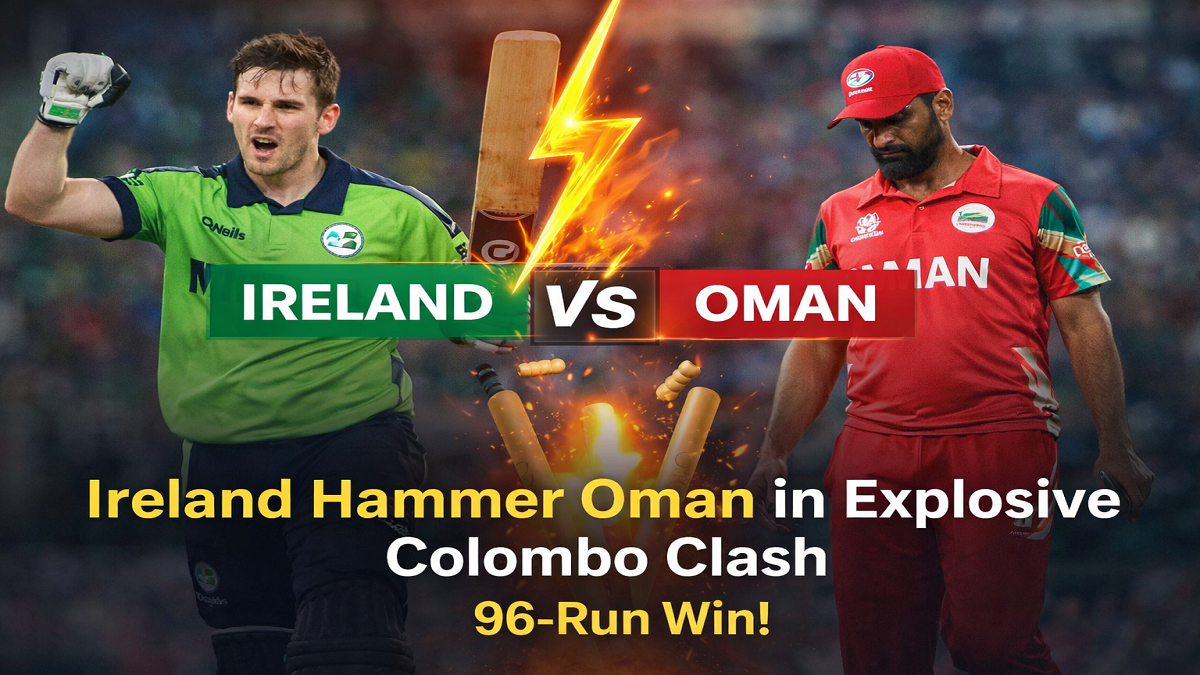
Ireland Hammer Oman in Explosive Colombo Clash
Ireland Hammer Oman by 96 runs in Colombo as Tucker’s 94* anchored a dominant performance with both bat and ball.
Ireland Hammer Oman in Explosive Colombo Clash
Colombo delivered a loud statement in Group B as Ireland hammer Oman by 96 runs at the ICC Men’s T20 World Cup 2026. A towering total changed the mood early. Smart bowling then made the chase feel impossible. Ultimately, Ireland controlled the match from the middle overs onward.
Oman won the toss and chose to field, hoping early swing and fresh pace would keep Ireland in check. Although wickets did arrive, the plan did not last. Instead, Ireland rebuilt with calm heads and clear intent. As a result, the innings grew into a run-fest that Oman could not contain.
Lorcan Tucker led the charge with an unbeaten 94. Meanwhile, Gareth Delany supplied the mid-innings punch. Later, the final overs added a brutal finish that pushed the score beyond comfort. Because the target crossed 230, Oman entered the chase under instant pressure.
Match Context: Why This Game Mattered
Group matches often become net run rate battles, especially when teams are close on points. Therefore, a big win carries double value. Ireland needed not only points, but also a boost in confidence. Oman, on the other hand, needed a complete performance to stay in the race.
Conditions at the Sinhalese Sports Club usually reward good batting, yet bowlers can still win if they hit lengths early. Consequently, the toss felt important. Even so, execution mattered more than the decision.
Ireland’s Powerplay: Early Wickets, Steady Nerves
Ireland began with positive intent. However, Oman struck quickly and removed key batters in the opening burst. For a moment, the innings looked shaky. Still, the score kept ticking because Ireland did not freeze.
At 47/3, the pressure was real. Yet panic never arrived. Instead, Ireland focused on singles and smart boundaries. As a result, Oman could not build a long spell of dot balls.
That approach was crucial. In contrast, a slow rebuild would have capped Ireland’s total. Because the run rate stayed healthy, the later assault became possible.
Tucker’s Approach: Calm First, Then Power
Leadership in T20 cricket starts with decision-making. Tucker showed that immediately. Rather than forcing big shots, he played the situation. Moreover, he protected wickets without slowing the innings too much.
Timing became his weapon. In addition, placement kept the field moving. When Oman missed their line, Tucker punished them. When they bowled tight, he ran hard. Therefore, momentum stayed with Ireland even during quiet overs.
As the innings progressed, Tucker changed gears. Consequently, the middle overs turned into Ireland’s best phase. That shift also forced Oman to defend bigger areas of the ground.
The Key Partnership: Tucker and Delany Turn the Match
Delany arrived with a clear plan. Instead of taking time, he attacked from the start. Moreover, his boundary options were clean and direct. Because he hit over the infield, Oman’s field settings lost value.
The partnership was not only about hitting. It was about pressure. In addition, it was about tempo control. Tucker rotated strike, while Delany hunted boundaries. As a result, Oman’s bowlers had no safe over.
Once this stand settled, the match changed shape. Therefore, Ireland moved from recovery mode into domination mode.
Middle Overs Breakdown: Why Oman Lost Control
Middle overs reward clarity. Ireland had it. Oman, however, looked unsure. First, Ireland kept the singles flowing. Second, Ireland targeted weaker matchups. Third, Ireland avoided risky strokes when the field was set.
Because those three things stayed consistent, Ireland never gave Oman a way back. Meanwhile, Oman tried changes in pace and angle. Still, the batters read it early.
In contrast, teams that defend 170 can survive a few bad balls. When the score is heading for 230+, every loose ball becomes costly. Consequently, Oman’s margin for error disappeared.
Death Overs: The Total Jumps Into Another Zone
The final overs were brutal. Ireland attacked straight and hard. Furthermore, they did not allow the bowlers to settle. When yorkers missed, boundaries came. When slower balls sat up, sixes followed. Therefore, the finish looked unstoppable.
This late surge pushed Ireland beyond 230. As a result, Oman’s chase became a mountain.
For readers tracking the biggest totals in this tournament, this game also fits the wider pattern of record-breaking batting. You can explore the highest scores and the biggest totals here:
👉 https://playlivecricket.com/t20-world-cup-2026-highest-score-breaks-records/
Ireland 235/5: What the Number Actually Means
A score above 230 does two things. First, it forces the chasing team to attack from ball one. Second, it makes every wicket feel like a disaster. Consequently, batters take risks earlier than they want.
Ireland understood that psychology. Therefore, the bowlers started the second innings looking for wickets, not containment.
Oman’s Chase: Positive Start, Rising Pressure
Oman began with intent. However, the required rate remained high throughout the powerplay. Even a good over felt insufficient. Because of that, the chase needed one long partnership to stay alive.
At first, boundaries kept Oman close. Still, the asking rate was climbing. As a result, the chase demanded near-perfect execution.
Once wickets started to fall, the chase lost rhythm. Therefore, the batting side had to swing harder. That created more chances for Ireland.
Ireland Hammer Oman: Kaleem and Mirza Provide Resistance
Aamir Kaleem played with courage and clear intent. Moreover, he attacked the ball in his zone and kept the chase moving. Hammad Mirza also found gaps and rotated strike. Together, they gave Oman their best phase.
However, the partnership needed support from the other end. When wickets fell around them, momentum dropped. Consequently, the required rate became too steep again.
In big chases, one strong stand is not enough. Therefore, Oman needed a second partnership of similar length. That second stand never arrived.
Ireland Hammer Oman: Run Outs and Forced Risks
Pressure often creates run outs. This chase had pressure from the start. As a result, quick singles became dangerous. In addition, tight twos became tempting.
A couple of key moments turned into lost wickets. Those dismissals hurt twice because they also broke rhythm. Therefore, the chase became fragmented.
After that, shots became riskier. Meanwhile, fielders gained energy. Consequently, Ireland’s bowlers could attack with confidence.
Ireland’s Bowling: Disciplined and Simple
Ireland defended the total with clear plans. They attacked the stumps. They used slower balls at the right time. In addition, they protected key boundary areas.
Dot balls increased through the middle overs. Therefore, Oman had to swing harder. Because risks rose, wickets followed.
This is how big totals are defended. Not with panic. Instead, it is done with pressure, patience, and timing.
Ireland Hammer Oman: Turning Points That Decided the Match
First, Ireland avoided a collapse after 47/3.
Next, Tucker and Delany flipped the game with control plus power.
Then, death-over hitting pushed the total into a chase-proof range.
Finally, early pressure in the chase forced Oman into mistakes.
Each phase built on the last. Consequently, the margin grew quickly.
What This Result Means for Group B
Net run rate can decide qualification. Therefore, this win matters more than a normal two points. Ireland also gain momentum, which can change the next match. Oman, meanwhile, must regroup quickly because the group schedule does not wait.
Colombo has already produced shocks in this tournament. For example, Zimbabwe stunned Australia at this venue in a dramatic result. You can read our full analysis here:
👉 https://playlivecricket.com/zimbabwe-shock-australia-with-stunning-23-run-win-in-colombo/
Because surprises are happening, every team must stay sharp.
Ireland Hammer Oman: What Ireland Did Right
Ireland won because they controlled key moments.
- The rebuild stayed steady and did not slow the run rate.
- Acceleration came at the right moment in the innings.
- Bowling remained tight and disciplined.
- Early pressure forced Oman into risky shots.
As a result, the match never became balanced after the middle overs.
Ireland Hammer Oman: What Oman Must Improve Next
Oman can take lessons from this loss. First, death bowling must be tighter, especially under pressure. Second, batting partnerships must last longer in big chases. Third, running between wickets needs calmer decision-making.
If those areas improve, Oman can compete better. However, the margin for error in World Cups is very small.
Final Score Summary
Ireland: 235/5 (20 overs)
Oman: 139 all out (18 overs)
Result: Ireland won by 96 runs
Final Thoughts
This match showed how fast T20 games can change. Early wickets suggested Oman had control. However, Ireland’s middle order refused to slow down. As a result, the innings grew into a massive total.
Tucker’s unbeaten 94 gave the innings shape. Delany’s power gave it speed. Later, the death overs gave it cruelty. Therefore, Oman entered the chase under constant pressure.
Oman fought with intent, yet the total was too high. Once wickets fell, the chase could not recover. Consequently, Ireland sealed a statement win in Colombo.
Play Live Cricket
Play Live Cricket brings you match reports, live-score insights, cricket news updates, and tournament analysis in clear, easy language. We focus on strong SEO structure, fast updates, and fan-friendly storytelling so readers can understand the full match in minutes.
Explore more ICC T20 World Cup coverage, record totals, and daily match reports on PlayLiveCricket.com.
Disclaimer
This article is written for informational and editorial purposes only. Match information, scores, and statistics are based on publicly available scorecards and coverage sources. Tournament names and team names are trademarks of their respective owners. Play Live Cricket is an independent website and is not officially affiliated with the ICC or any team.