Islamabad United vs Rawalpindi Match Analysis
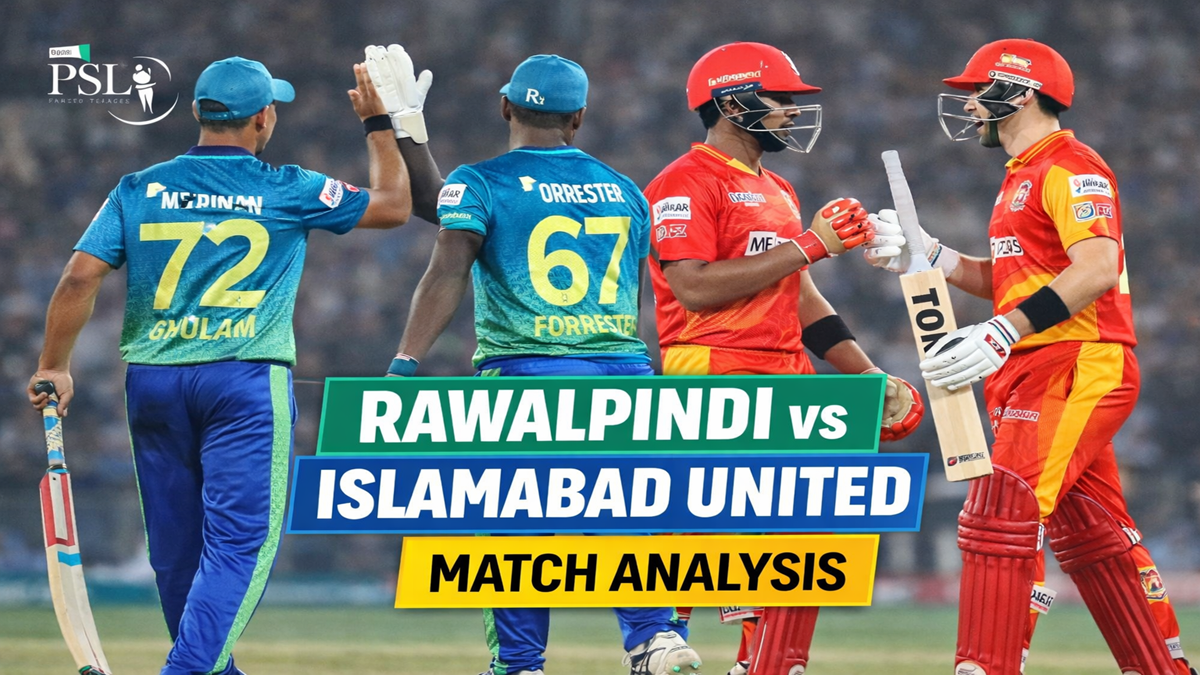
Islamabad United vs Rawalpindi, IU win by 7 wickets in PSL 2026 after Sameer Minhas smashed 70 off 36 and led a powerful chase of 157 in just 14.2 overs.
Islamabad United vs Rawalpindi Match Analysis
Rawalpindi vs Islamabad United became a one-sided chase ultimately. Even though the 1st innings had some moments where Rawalpindi looked like they might construct something larger. Islamabad United gained by way of 7 wickets, chasing 157 in just 14.2 overs. They did it with control to make the goal look smaller than it honestly turned into. The scoreboard says 156 for 7 towards 157 for 3. However, the actual distinction changed into in pace. Powerplay reason and the manner in which Islamabad dealt with the middle overs.
Rawalpindi had a rough start. Recovered through Kamran Ghulam, found overdue hitting from Dian Forrester, and in some way dragged themselves to a total. But in T20 cricket, “fighting total” only works if the bowling unit hits its mark early and builds stress. Islamabad United no longer allowed that to manifest. Sameer Minhas performed the innings that broke the chase open. Once he got going, Rawalpindi has been constantly at the back of the game.
Lahore Qalandars vs Multan Sultans Match Analysis
Islamabad United vs Rawalpindi Began with Rawalpindi in Trouble
Rawalpindi’s innings commenced badly. There may be no tender way to mention it. Mohammad Rizwan made 2 runs on 8 balls. Yasir Khan also made only 2 runs, and the facet fell to 15 for 2. While your senior batters move through that early stage, and that quietly. The innings must be rebuilt first before they can be expanded.
That early harm formed the whole innings. Islamabad United’s bowlers got here in with subject and control. Richard Gleeson struck 2 times and removed Yasir Khan and Rizwan. The ones wickets did more than just harm the score. They changed the mood of the innings. The Rawalpindi team was in survival mode, but needed to attack to chase the score easily.
Kamran Ghulam became the batter who gave them a manner lower back. He scored 50 from 39 balls, hit 6 fours and a pair of sixes. He performed the innings with sufficient patience to maintain things collectively. His knock was now not wild, and now not reckless. It was very crucial due to the fact that Rawalpindi needed a person to live there after the early fall apart.
Daryl Mitchell chipped in with 19 from 15, and the 3rd-wicket partnership between Mitchell and Kamran Ghulam gave the innings a few calm moments. They added 51 runs. This turned into probably the first phase where Rawalpindi could breathe a little. However, the run charge in no way exploded.
Islamabad United vs Pindiz Changed in the Powerplay
Powerplay numbers inform you a lot in T20 matches, and this sport has become no ordinary. Rawalpindi scored 35 runs in the first six overs. Islamabad United scored 62 runs in their first six overs.
This is where the match virtually broke apart. Rawalpindi’s powerplay changed into sluggish and complete with damage management after early wickets. Islamabad’s powerplay became aggressive, smooth, and full of self-belief. Chasing turns into a whole lot simpler when you come out of the first 6 overs, already well ahead of the asking charge. The chase was too hard, so they needed a good explosive start, but they failed.
Rawalpindi never recovered fully from their gradual start. Islamabad made certain they by no means needed to sense that equal stress inside the chase.
Islamabad United vs Rawalpindi Saw a Late Rescue from Dian Forrester
Rawalpindi’s final score of 156 for 7 looks respectable handiest due to the fact Dian Forrester performed a super unbeaten hand past due within the innings. He made 44 not out from just 19 balls. Putting at greater than 231, and that overdue burst changed the texture of the total. Without him, Rawalpindi may have ended around 135 or 140. Then the match could have been regarded even more lopsided.
Abdullah Fazal additionally helped with 23 from sixteen, along with sixes, but as soon as he got out at 117 for six, Rawalpindi were still in danger of finishing poorly. Forrester’s boundary hitting within the final overs gave them at least something to defend. His knock was full of urgency, precisely what the innings lacked in advance.
Nevertheless, the problem became that Rawalpindi had spent an excessive amount of time rebuilding and no longer had enough time to control the match. T20 batting is brutal that way. You can get over early wickets; however, if the healing is simply too sluggish, you turn out to be with a total that feels ok on paper and underwhelming in fact.
Islamabad United vs Rawalpindi Bowling Analysis Favoured Islamabad
Islamabad United’s bowling attack did not need magic. They simply wanted discipline, and they were given it.
Richard Gleeson became tremendous with 2 for 21 in four overs. He took the important thing, wickets early, and kept his economic system under control. Faheem Ashraf sponsored him with 2 for 22 in four overs. Even as Imad Wasim’s spell of 1 for 15 in four overs changed into possibly the most treasured in terms of control. In a T20 innings where one aspect is trying to rebuild, a spell like that quietly squeezes the existence out of scoring options.
Salman Irshad picked up wickets, even though he went for runs. What mattered most for Islamabad was that they saved breaking partnerships. Rawalpindi by no means had one lengthy stand that completely shifted momentum.
This is the mark of a clever T20 bowling facet. You could concede some blows, but you keep taking wickets in the moments that count.
Islamabad United vs Rawalpindi Chase Was Ruled by Sameer Minhas
If Rawalpindi had any wish, it wanted early wickets within the chase. Alternatively, Islamabad United came out like a team that believed 157 became nicely beneath par.
Devon Conway fell for just 6, so Rawalpindi did get an early leap forward. But that was approximately the handiest easy advantageous within the first 1/2 of the chase. Sameer Minhas then took over absolutely.
He smashed 70 from 36 balls, hitting 7 fours and 4 sixes. It became the type of innings that kills a chase contest as it combines strength with control. He no longer just clears the ropes. He kept the board moving and saved the strain on bowlers, and made certain that Islamabad in no way drifted into panic.
His establishment of a partnership with Conway gave Islamabad 58 runs. Even after Conway left, Sameer did not slow down. He introduced 34 with Mohammad Faiq, then kept the chase consistent until his dismissal at 92 for 2. By using that factor, the match had already leaned in Islamabad’s way.
Islamabad United vs Rawalpindi Finished with Haider Ali and Mark Chapman Flair
After Sameer’s wicket, there was still some work to do. But Haider Ali and Mark Chapman made sure there would be no late drama.
Haider Ali remained unbeaten on 26 from 16 balls, and Mark Chapman blasted 24 not out from just 7 balls. Chapman’s strike rate above 340 shows exactly what he came to do. He ended the chase quickly and brutally. Those late overs could have been nervous if Islamabad had slowed down, but Chapman made sure the result was finished in style.
This is what strong chasing teams do. One batter sets the base, the others make sure there is no opening for the opposition to sneak back in.
Rawalpindi needed a collapse. Islamabad gave them none.
Islamabad United vs Rawalpindi Exposed the Difference in Intent
The biggest difference between the two teams was intent in the right phases.
Rawalpindi had a decent recovery, but they were always slightly late. Their acceleration came after damage had already been done. Islamabad United, on the other hand, attacked from a position of control. They made the target feel simple by winning the powerplay and refusing to let the asking rate become a talking point.
Rawalpindi’s bowlers were not terrible individually. Mohammad Amir gave a solid spell and picked up a wicket. Jalat Khan and Rishad Hossain also got one each. But collectively they did not create enough scoreboard pressure. The wides and extras also did not help, and in a chase of 157, every extra run makes the batting side more comfortable.
Islamabad’s batting lineup looked calmer, deeper, and more prepared for the pace of the game.
Islamabad United vs Rawalpindi Final Verdict
Rawalpindi vs Islamabad United was decided by the quality of the powerplay and the sharpness of the chase. Rawalpindi’s 156 for 7 was built on effort, rescue work, and a strong finish from Dian Forrester, but the early collapse and slow first half left them short. Kamran Ghulam’s fifty gave them structure, and Forrester’s late 44 not out gave them hope, but it still felt 15 to 20 runs under what they truly needed.
Islamabad United chased like a top T20 side. Sameer Minhas was the star with a match-winning 70 from 36, and he got excellent support from Haider Ali and Mark Chapman at the finish. Their powerplay of 62 runs compared to Rawalpindi’s 35 was the cleanest summary of the match.
In the end, Islamabad United did not just win. They controlled the game, understood the chase better, and finished it with authority. Rawalpindi had moments. But Islamabad had the stronger plan and the better execution.
Stay Tuned to Play Live Cricket
Stay tuned to Play Live Cricket for more match analysis, tactical breakdowns, score-based testimonies, and actual cricket perception from PSL 2026.
Disclaimer
This article is written for cricket news, analysis, and fan discussion functions only. Match statistics are primarily based on the available scorecard information and publicly available match information. All participant names, team names, league names, and fit facts belong to their respective proprietors and official match sources.