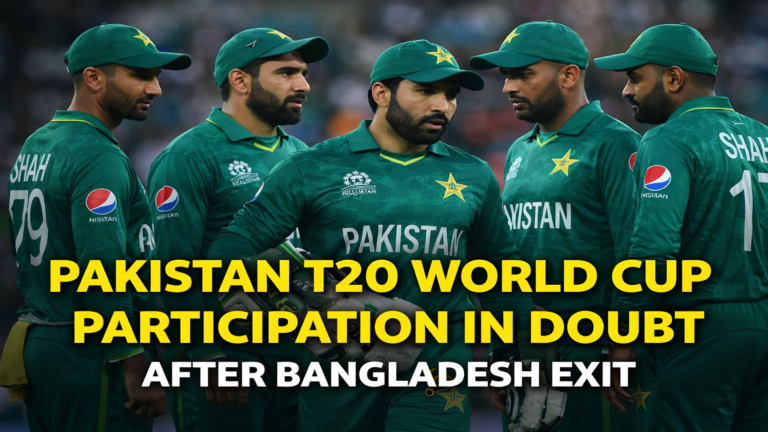

Pakistan Thrash Namibia by 102 Runs in Colombo
Pakistan thrash Namibia by 102 runs at SSC Colombo as Sahibzada Farhan blasts 100* and the bowlers rip through Namibia for 97 in 17.3 overs.

Pakistan Thrash Namibia
Heading into this Group A clash, the team knew there was no room for a messy night. The table pressure, the recent scars, and the tournament math all demanded one thing: a complete performance. They delivered it with the kind of authority that changes a campaign’s mood in a single evening. Pakistan piled up 199/3 and then demolished Namibia for 97 all out in 17.3 overs, sealing a 102-run win at the Sinhalese Sports Club Ground, Colombo on February 18, 2026.
Pakistan didn’t just win this match they sent a message. They followed two clear plans. First, they attacked with intent while staying composed. Second, they struck early with pace and then tightened the grip through spin and smart match-ups. The scoreboard highlights the margin, but Pakistan’s real dominance came from how they controlled every phase powerplay, middle overs, and death—across both innings.
Pakistan Thrash Namibia: Match Context and What Was at Stake
Group stages in a World Cup rarely forgive hesitation. Therefore, Pakistan entered this match knowing they needed more than just a win. They needed points, momentum, and a performance strong enough to rebuild confidence. At that stage, India led Group A, while Pakistan and the USA competed closely in the same points bracket. As a result, every victory mattered. More importantly, the winning margin could shape qualification scenarios.
For that reason, Pakistan made a bold and clear decision at the toss. They chose to bat first and trusted their top order to set the tone. By doing so, they allowed their bowlers to attack later instead of defend under pressure. Moreover, Colombo’s surface often becomes tricky during a chase. Once the ball grips and the spinners settle, scoring grows difficult. Because of this, batting first gave Pakistan control. Ultimately, that decision defined the rhythm of the entire night.
Pakistan Thrash Namibia: Farhan’s Hundred Sets the Tone
The innings belonged to Sahibzada Farhan, and not just because he reached three figures. He built the innings with control early, attacked ruthlessly at the end, and stayed calm in between. Farhan finished 100 off 58 balls*, striking 11 fours and 4 sixes at a strike rate of 172.41.
Pakistan did lose an early wicket, but even that moment did not slow their intent. Saim Ayub made 14 off 12, caught behind off Brassell, and Namibia briefly had a window to tighten up.
Farhan responded by leaning into high-percentage scoring zones: hard-run singles when the ring was up, and clean boundary options when Namibia missed their length. His footwork looked clear, which matters on Colombo surfaces—small steps to create angles, stable base to hit straight, and enough patience to wait for the ball that could be launched without risk.
Pakistan Thrash Namibia: Salman Agha’s Impact Middle Overs
If Farhan was the engine, Salman Agha was the accelerator through the middle. He played the innings that turns a “good total” into a “match-winning total.” Salman scored 38 off 23 balls, with 3 fours and 2 sixes, striking at 165.21.
That partnership phase was crucial because Namibia were not completely off their lines. Their bowlers tried to keep the ball wide, forced hits into longer pockets, and looked to drag Pakistan into low-risk accumulation. Salman refused to let that happen. He used the crease, hit into the V, and punished anything even slightly overpitched or short. The scoreboard pressure began here—Namibia were already chasing the game before the death overs arrived.
Salman fell in an unusual moment when he picked out the fielder at mid-off while attempting to go straight down the ground. Namibia needed that breakthrough, but it arrived too late to disrupt Pakistan’s larger plan.
Pakistan Thrash Namibia: Quick Wickets, No Panic
Khawaja Nafay stayed only briefly. He scored 5 from 5 balls before Gerhard Erasmus took a sharp caught-and-bowled chance.
At 118/3, Namibia still had a small opening. If they controlled the final overs and kept Pakistan below 180, the chase could have remained competitive. However, Pakistan quickly removed that hope. They accelerated and shut the door without delay.
Pakistan Thrash Namibia: Shadab’s Finish Raises the Ceiling
This is where Shadab Khan changed the innings shape. He came in and played a clean finisher’s role: hit the bad ball, rotate the good ball, keep Farhan on strike when possible, and attack the pockets Namibia protected least. Shadab finished 36 off 22 balls*, with 1 four and 3 sixes, striking at 163.63.
More importantly, his cameo allowed Farhan to stay calm. Farhan did not have to force risky shots to reach 200. Shadab took that responsibility and made sure Namibia’s best overs never arrived. Pakistan ended exactly where they wanted: 199/3 in 20 overs (extras 6).
A major subplot from the scorecard is also what Pakistan didn’t need. Babar Azam did not bat, along with Usman Khan, Mohammad Nawaz, Faheem Ashraf, Salman Mirza, and Usman Tariq. That tells you how dominant the top and middle order were in building a platform and then finishing it.
Pakistan Thrash Namibia: Namibia’s Bowling
Namibia created a few wicket moments. Jack Brassell took two wickets but leaked runs. Erasmus added one important breakthrough. However, the bigger concern was their economy rate. They struggled to control boundaries, especially in the death overs. By that stage, Pakistan’s set batters had already read the field and planned their shots.
When a team concedes nearly 200 runs and takes only three wickets, clear issues appear. First, there is not enough dot-ball pressure. Second, there is not enough variation to force mistimed shots. Although Namibia bowled a few tidy overs, they could not build sustained pressure. Pakistan’s depth and intent kept breaking the rhythm. As a result, one loose over erased the impact of two disciplined ones. In T20 cricket, that pattern often proves costly.
Pakistan Thrash Namibia: Namibia’s Chase Starts Bright, Then Collapses
Namibia’s chase needed an ideal powerplay. Instead, it became a chase with constant rebuilding. Pakistan’s bowlers wrapped up Namibia for 97 in 17.3 overs and never allowed them to threaten the target.
Louren Steenkamp top-scored with 23 off 22, but even that innings shows the issue: it was hard work for modest returns, and the required rate kept climbing.
Early on, Namibia’s best chance was to keep wickets in hand and take the game deep, hoping for one explosive stretch. Pakistan’s bowling made sure that stretch never arrived. They attacked stumps, protected boundaries, and used spin to force risky shots into the longer side.
Pakistan’s Bowling Plan: Spin Strangle + Strike Options
Pakistan’s bowlers delivered a complete team performance, and it wasn’t random. The wicket-taking was shared, the economy was controlled, and the match-ups were clear.
- Usman Tariq: 4/16 in 3.3 overs (plus a maiden)
- Shadab Khan: 3/19 in 4 overs
- Mohammad Nawaz: 1/22 in 4 overs
- Salman Mirza: 1/11 in 2 overs
That is the entire story of the chase in four lines. Namibia did not lose because one batter failed; they lost because Pakistan never gave them a safe phase. Every time Namibia tried to rebuild, a wicket arrived. Every time Namibia tried to attack, Pakistan’s spinners dragged them into high-risk zones.
Key Wickets That Broke the Chase
The first crack appeared early. Salman Mirza bowled Jan Frylinck for 9 and removed stability at the top. As a result, Namibia had to reshuffle their plans sooner than expected.
From that point onward, the chase never settled. Partnerships stayed short and fragile. Namibia lost wickets at key moments. Loftie-Eaton ran out. Erasmus followed soon after. Then came a cluster of dismissals as the required rate climbed sharply and pressure took over.
Meanwhile, Pakistan dominated the finer details. The late overs highlighted sharp fielding and clean execution. NDTV’s cricket news pointed to a stunning boundary catch by Saim Ayub to dismiss Zane Green. That moment showed Pakistan were winning the small battles as well as the big ones.
Finally, Usman Tariq delivered the decisive blow. His spell cut through the lower order and ended any remaining resistance. NDTV tracked his wicket streak, including the dismissal of Bernard Scholtz. By the end, Tariq had claimed four wickets and sealed a complete bowling performance.
Namibia Batting Scorecard Snapshot
Namibia’s batting card shows how quickly hope disappeared: Steenkamp 23 (22), Busing-Volschenk 20 (20), Frylinck 9 (11), Smit 9 (13), Green 7 (9), and most others failed to reach double figures, as they were bowled out for 97 with 7 extras.
Those numbers are not just low; they show a lack of one substantial partnership. In T20, you can survive early wickets if one pair adds 50–60 quickly. Namibia never found that platform. Their fall-of-wickets timeline keeps the pattern clear: wickets at 4.1, 5.2, 6.5, 7.3—too many too soon—then the innings kept bleeding.
Turning Point: Pakistan’s 16–20 Over Surge
Even with Farhan set, Pakistan were not guaranteed 199 at the 15-over mark. What flipped the match beyond reach was the finishing surge powered by Farhan and Shadab. Once Pakistan crossed the 180 range with wickets in hand, Namibia’s chase required an almost perfect powerplay and a flawless middle. They got neither.
This is why 199 felt bigger than 199. It wasn’t a “par score” total. It was a total that allowed Pakistan to bowl attacking lines, bring spinners early, and set fields for wickets rather than protection.
What This Win Means for Pakistan
In group tournaments, big wins don’t just add points—they restore belief. Pakistan’s 102-run margin is a signal that their best version is still available when the pressure is highest. It also strengthens their overall position in Group A, where the margins and net run-rate battles can decide qualification paths.
More importantly, the structure of this performance is repeatable. Farhan’s innings was built on basics and smart targeting. Salman’s cameo was role clarity. Shadab’s finish was game sense. The bowling was layered: pace to start, spin to dominate, and wicket-taking options to end the chase.
Final Word
Pakistan didn’t just beat Namibia—they controlled them. A Farhan century (100)* set up a towering 199/3, and then a ruthless spin-led attack, topped by Usman Tariq’s 4/16 and Shadab’s 3/19, crushed Namibia for 97. The result—Pakistan won by 102 runs—was the clearest definition of a complete T20 performance: big runs, early pressure, constant wickets, and sharp fielding.
Play Live Cricket
Stay tuned for more match reports, points-table updates, and SEO-ready coverage on Play Live Cricket.
Disclaimer
This match report is based on publicly available score sources and cricket news; final figures and playing details are reported as per the listed scorecards.