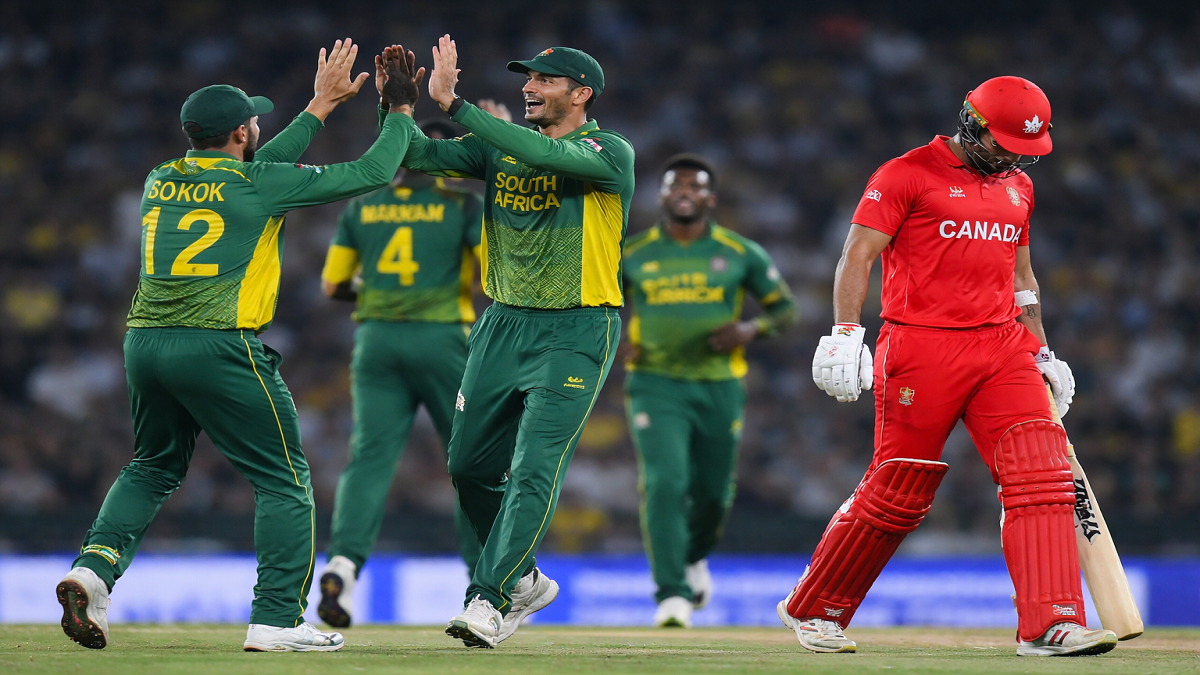
South Africa Beat Canada by 57 Runs at Ahmedabad in T20 WC
South Africa beat Canada by 57 runs at Ahmedabad in the ICC Men’s T20 World Cup 2026 after posting 213/4 and restricting Canada to 156/8.
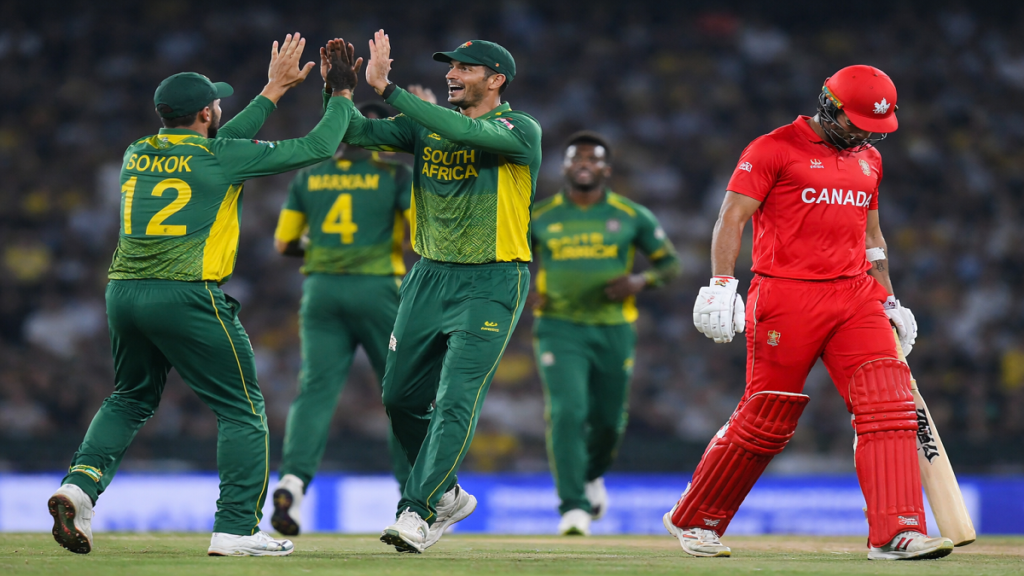
South Africa Beat Canada by 57 Runs at Ahmedabad
A dominant 57-run win over Canada gave South Africa full points in the 9th Group D fixture at Ahmedabad in the ICC Men’s T20 World Cup 2026. It was a complete display. South Africa smashed 213/4 in 20 overs. After that, they defended the total with control. Canada finished on 156/8, and the gap stayed clear all night.
This match had one main theme. South Africa kept scoring in every phase. Canada kept chasing the pace. As a result, the pressure never dropped. Even when Canada found boundaries, the required rate remained steep.
The scoreline shows dominance. The flow of the game shows planning. South Africa played with clarity. Canada played with courage. However, South Africa executed better for longer.
Match Overview: South Africa vs Canada, T20 World Cup 2026
Ahmedabad offered a true batting pitch. The ball came on nicely. Timing felt easy in the first innings. Therefore, a big total was always possible.
South Africa decided to attack early. They also protected wickets smartly. That combination produced a huge score. Canada tried several plans. Still, they could not stop the boundary flow.
During the chase, Canada started with intent. Yet South Africa kept taking the game back. They used changes of pace. They also used smart field settings. Because of that, Canada never built a long partnership.
In the end, South Africa won comfortably. Moreover, they boosted their net run rate.
South Africa Beat Canada: Pitch and Conditions at Ahmedabad Stadium
The surface stayed flat. Bounce remained even. Seamers got little movement early. Therefore, bowlers needed accuracy.
Spinners also faced a challenge. There was not much turn. So, they had to vary pace and angles. Slower balls and cutters worked better than pure spin.
Dew can matter in Ahmedabad. Even so, both teams handled the ball reasonably well. The bigger factor was execution. South Africa executed better in both innings.
A target of 190 often wins here. However, South Africa pushed well beyond that mark. That decision shaped the chase.
South Africa Beat Canada: South Africa’s Batting Performance Against Canada
South Africa batted with power and structure. They did not rely on one batter. Instead, multiple players kept the tempo high. Also, the running between wickets stayed sharp.
The innings can be split into three parts. First came the aggressive start. Then came controlled acceleration. Finally came the finishing surge.
Powerplay: Fast Start Without Risk
South Africa attacked early. They used the field restrictions well. Boundaries came through both timing and force.
Canada tried to bowl full to block hits. However, that plan offered width at times. As a result, batters drove and cut freely. Short balls also suffered because the bounce stayed true.
Singles mattered too. South Africa rotated strike quickly. Therefore, bowlers could not settle on one batter. The scoreboard kept moving every over.
A wicket might have slowed them. Yet South Africa managed the risk well. They stayed positive and stayed smart.
Middle Overs: Pressure Through Rotation and Hitting
The middle overs often decide a T20 total. South Africa treated them like a launch pad. They did not slow down. Instead, they found a higher gear.
Spinners came on to control the rate. Still, South Africa targeted safe zones. They hit straight when possible. They also used sweeps and punches to access gaps.
Canada searched for wickets. However, South Africa protected their set batters. They chose their shots carefully. Because of that, the run rate stayed high without chaos.
Even when Canada bowled a tight over, South Africa answered with a boundary next over. That pattern broke Canada’s rhythm.
Death Overs: Clean Finish to Reach 213/4
South Africa entered the final overs with wickets in hand. Therefore, they could attack freely. Even so, they kept their shape.
They punished overpitched balls. They also pulled short deliveries with confidence. When Canada tried slower balls, the batters waited and hit late.
Canada picked up a couple of wickets near the end. However, South Africa had already built a massive base. The total crossed 200. Soon after, it reached 213/4.
That score created immediate pressure. In fact, it forced Canada to chase boundaries from the start.
Canada’s Chase After South Africa Beat Canada
Canada needed 214 to win. That meant a fast start and steady partnerships. Otherwise, the required rate would jump quickly.
Canada began with intent. They looked for boundaries early. That approach made sense. Still, South Africa had the stronger attack. Also, they had the bigger cushion.
Powerplay: Brave Approach, Early Resistance
Canada pushed hard in the first six overs. They found a few boundaries. They also ran well between the wickets. For a short time, the chase stayed alive.
South Africa responded with calm bowling. They hit a hard length and attacked the stumps. At the same time, they packed the ring to block easy singles.
A key wicket changed the mood. It did not end the chase. However, it slowed the scoring rhythm. As a result, Canada needed a new partnership under pressure.
Canada continued to fight. Yet the target kept pulling away.
Middle Overs: South Africa Tighten the Net
The middle overs decided the chase. South Africa squeezed hard here. They used cutters and slower balls. They also changed angles to disrupt timing.
Canada tried to counterattack. Still, mistimed shots increased. Dots also increased. Therefore, the required rate moved higher with every quiet over.
A chase of 214 cannot afford slow phases. Canada faced exactly that problem. They lost wickets while trying to restart momentum. As a result, the innings kept resetting.
South Africa’s fielding added pressure too. They cut off singles. They also saved boundaries in the deep. Those small wins mattered.
Final Overs: Late Runs, But the Gap Stays Wide
Canada showed heart at the end. They kept swinging. A few boundaries arrived. However, the match was already slipping away.
South Africa stayed composed. They bowled full when needed. They also mixed slower balls smartly. Because of that, Canada could not line up consistent hitting.
Canada finished on 156/8. The chase ended 57 runs short. The effort was honest. Still, the target proved too high.
Key Moments That Shaped the Match
Several moments decided this contest. South Africa’s early boundary burst was the first. That fast start set the tone.
The second key moment came in the middle overs. South Africa kept scoring while protecting wickets. Therefore, Canada could not pull the run rate back.
During the chase, early breakthroughs mattered. South Africa also struck whenever Canada looked set. As a result, partnerships never grew.
Fielding played its part too. Saves in the ring created dot balls. Stops in the deep prevented quick momentum. Those details helped South Africa stay in control.
Bowling Analysis: How South Africa Defended 213/4
Defending 213 requires discipline. South Africa delivered it. They did not chase magic balls. Instead, they stuck to a plan.
Seamers bowled hard lengths early. They also attacked the stumps to bring bowled and LBW into play. Spinners used pace changes rather than big turn. Meanwhile, cutters helped on this surface.
South Africa also read the batters well. When Canada tried to hit straight, they protected that area. When Canada tried to hit square, they bowled into the pitch to reduce pace.
At the death, the bowlers kept their nerve. They avoided easy width. They also forced hits to the larger pockets.
This was smart, modern T20 bowling.
Why South Africa Beat Canada by 57 Runs
South Africa beat Canada because they won every phase. They started fast. They accelerated again in the middle. Then they finished strongly.
Canada never found a long quiet spell with the ball. Therefore, South Africa kept the run rate high throughout. That consistency produced 213/4.
During the chase, Canada needed perfect timing. However, South Africa removed that comfort. They took wickets at the right times. They also blocked singles, which raised pressure.
A big target changes decision-making. It forces risks. Those risks created wickets. That cycle decided the game.
What This Result Means for Group D
This win gives South Africa valuable points in Group D. It also boosts their net run rate. In a World Cup group, that can matter a lot.
More importantly, the performance builds confidence. South Africa showed depth with the bat. They also showed control with the ball.
Canada will take lessons from this match. They faced a top side on a flat pitch. That is never easy. Still, experience like this helps them grow.
Canada’s Positives Despite the Loss
Canada showed intent, which matters in T20 cricket. They did not go into a shell. They tried to chase the target the right way.
Their batters found boundaries in patches. Their bowlers also fought through tough overs. However, they need more control in the middle overs.
They also need longer partnerships when chasing big totals. A chase cannot survive constant resets. Therefore, building one big stand will be key in future matches.
Even so, the effort was visible. The learning will be valuable.
South Africa’s Momentum in T20 World Cup 2026
South Africa look in strong touch. They can score fast. They can also defend totals with discipline. That balance makes them dangerous.
They also have depth. Multiple batters can finish. Multiple bowlers can take control. Therefore, opponents cannot plan for only one threat.
This match showed a confident team. It also showed a team playing clear roles. If they keep that clarity, they will remain a serious contender.
Final Verdict: South Africa Beat Canada with Authority
South Africa beat Canada by 57 runs at Ahmedabad because they stayed ahead from the start. They batted with power and control. They then bowled with discipline and calm.
Canada fought with spirit. However, the target was simply too large. South Africa made sure the chase never felt comfortable.
This was a statement win in the ICC Men’s T20 World Cup 2026. It also sent a clear message to Group D.
Play Live Cricket
Stay tuned with Play Live Cricket for match reports, tactical breakdowns, and full ICC Men’s T20 World Cup 2026 coverage.
Disclaimer: This article is based on official match data and analytical interpretation.