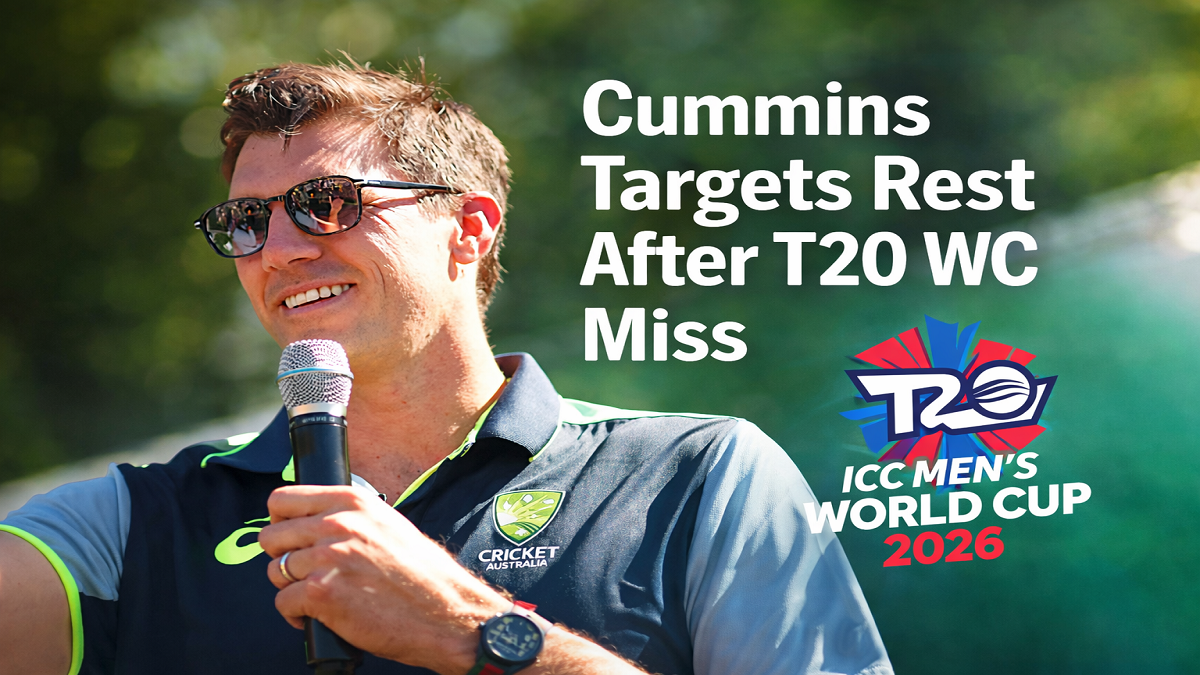
Pat Cummins Targets Rest After Missing T20 World Cup 2026
Pat Cummins plans rest and recovery after missing the T20 World Cup 2026, as Australia adjust their squad and strategy ahead of the tournament.
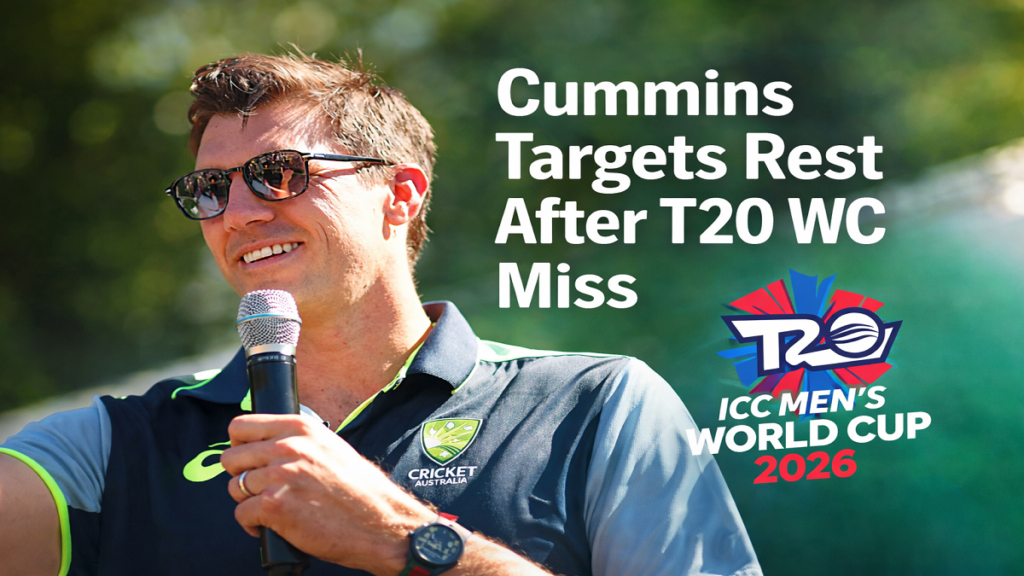
Pat Cummins Targets Rest After Missing T20 World Cup 2026
Australia fast bowler Pat Cummins has chosen rest and recovery after missing the ICC Men’s T20 World Cup 2026. The decision followed medical advice and long discussions with team management. Although he remained close to selection, fitness concerns ruled him out before the final squad announcement.
Instead of forcing a return, Cummins decided to pause. This choice reflects a wider change in modern cricket. Today, long-term fitness matters more than short-term results. Because of this, Australia will start the tournament without one of their most experienced players.
The T20 World Cup will be played in India and Sri Lanka. Conditions in both countries will test every team. Meanwhile, Australia move forward with a revised plan and a clear focus on balance and discipline.
Why Pat Cummins Missed the T20 World Cup 2026
The main reason behind the absence was a recurring back injury. Over recent months, discomfort returned several times during training. Although recovery showed progress, the final timeline remained tight.
Selectors waited until the last possible moment. However, medical staff advised caution. A rushed comeback could have caused long-term damage. As a result, Australia decided not to take that risk.
From a team perspective, the call made sense. Protecting a key player for future series remains important. Therefore, rest became the best option.
Pat Cummins: Injury History and Recent Setbacks
Fast bowlers often face heavy workloads. Long spells, travel, and packed schedules increase risk. Cummins has managed his body carefully in recent years. Still, back injuries require extra attention.
During preparation, small setbacks appeared. None were serious alone. However, combined issues slowed full recovery. Because of this, selectors had limited options.
Rather than gamble, Australia chose safety. That decision protects both the player and the team’s long-term plans.
Pat Cummins: Recovery Plan and Medical Approach
After missing selection, recovery became the main focus. The plan includes rest, light gym work, and gradual bowling sessions. Each stage aims to remove discomfort fully. Doctors want complete freedom of movement before match action. Back injuries demand patience. One rushed step can undo months of work.
Because of this, medical staff monitor progress closely. At the same time, confidence around recovery remains positive.
Pat Cummins: How the Absence Affects Australia’s Team Balance
Losing a senior bowler changes team structure. Experience often matters in close matches. Calm decision-making also plays a big role. Without that presence, responsibility spreads across the squad. Younger players must step up. Senior members must guide calmly.
However, Australia still possess depth. Several bowlers offer different skills. Teamwork can help reduce the impact.
Opportunity for New Players
Every absence creates opportunity. Younger bowlers now gain exposure. New combinations enter the spotlight. This experience helps future planning. Players learn pressure handling early. As a result, depth improves over time.
Australia have used this approach before. It has often delivered strong results later.
Australia’s Squad Changes After the Withdrawal
After confirming the change, selectors moved quickly. Ben Dwarshuis joined the squad to strengthen pace depth. His left-arm angle adds variation. Other adjustments focused on balance. Batting depth received attention. Spin options also gained importance.
As pitches slow later in matches, control matters more than speed. Therefore, these changes fit expected conditions.
Leadership Without Pat Cummins
Leadership remains stable despite the absence. Mitchell Marsh continues as captain. His style focuses on calm communication. Senior players provide support on the field. Clear messages help reduce pressure. As a result, structure remains strong.
Australia have prepared for such situations. Leadership plans were already in place.
Long-Term Strategy Behind the Decision
This decision aligns with Australia’s long-term vision. Several major series await later in the year. Test cricket places heavy physical demands on fast bowlers.
Instead of risking extended absence, management chose protection. This approach may extend playing years. It may also improve consistency.
In modern cricket, availability across seasons matters more than one tournament. Therefore, this decision shows planning rather than weakness.
What Comes Next After the T20 World Cup
Attention now turns to the Indian Premier League. Franchise cricket offers competitive intensity with controlled workloads. A return there would mark an important step. Beyond that, international tours continue. Challenging conditions require full fitness. Preparation for those series already influences recovery plans.
As rehabilitation continues, confidence around a strong return remains high.
Focus on IPL and Test Cricket
The IPL allows gradual match return. Games are frequent but manageable. Rhythm builds naturally. Later, red-ball cricket demands endurance. Long spells test fast bowlers heavily. Entering that phase fully fit becomes crucial.
Because of this, patience now may deliver greater impact later.
Impact on Australia’s T20 World Cup Campaign
Australia still enter the tournament with strong intent. However, expectations shift slightly. Execution must replace reliance on star power. Bowling discipline will decide matches. Fielding effort must stay high. Batting partnerships need stability.
If these areas work well, Australia can remain competitive.
Conditions in India and Sri Lanka
Subcontinent pitches often slow down. Spinners play a key role. Pacers must rely on accuracy and variations. Because of this, squad balance matters. Australia prepared for these challenges early. Planning reflects expected surfaces.
Adaptability will decide success more than pace alone.
Reaction From Fans and Experts
Fan reaction was mixed. Disappointment appeared first. However, understanding followed quickly. Many supporters recognised the long-term value of rest. Former players also supported caution. Analysts described the move as sensible.
Overall, reactions stayed calm and realistic.
Workload Management in Modern Cricket
Cricket schedules continue to grow. Players juggle formats, leagues, and travel. Pressure increases every season. As a result, workload management has become essential. Rest now forms part of strategy. This case may influence future decisions across teams.
Possible Return Timeline
Recovery remains on track. No surgery is required. Progress will guide timelines. Doctors prefer flexibility. Every step is reviewed. Rushing remains avoided. A strong return later may outweigh one missed event.
What This Means for Future ICC Events
Future tournaments may see similar decisions. Teams increasingly protect core players. Long cycles now matter more. For fans, expectations are changing. Star absences no longer signal weakness. Instead, they show planning.
Cricket continues to evolve in this direction.
Final Thoughts
Missing the T20 World Cup disappointed many. Still, health came first. Long-term success needs patience. Australia move forward with adjustments. New players step up. The squad adapts.
For Cummins, recovery remains the focus. Returning fully fit matters more than one tournament. The season ahead still offers many opportunities.
Play Live Cricket
Stay connected with Play Live Cricket for the latest T20 World Cup updates, squad news, injury reports, match previews, and expert analysis from around the cricketing world.
Disclaimer
This article is published for informational purposes only. Details are based on publicly available reports. Team selections and player availability may change. Play Live Cricket is not officially associated with the ICC or any national cricket board.